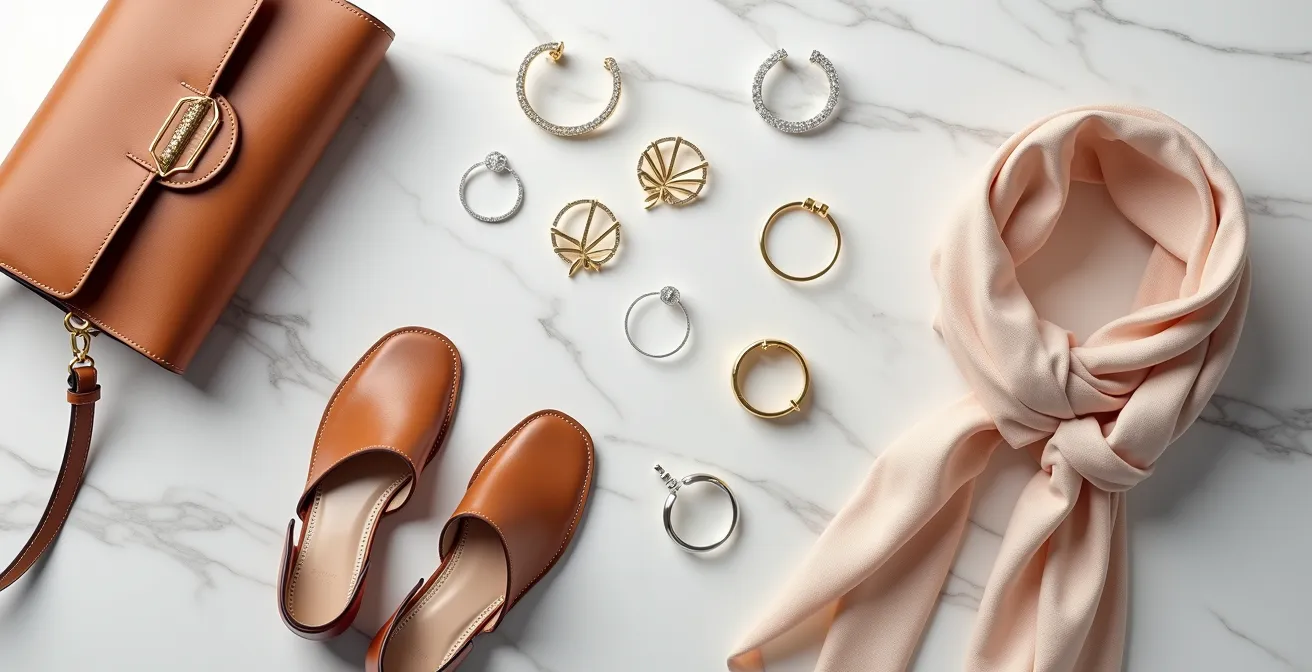
Contrary to popular belief, looking expensive has little to do with spending a lot of money. The real secret lies in mastering the invisible details and principles of visual harmony that signal quality and intention. It’s about shifting focus from the price tag of your clothes to the deliberate choices you make with your accessories, transforming any affordable outfit into a statement of sophisticated, personal style.
In a world of fast fashion, the desire for an elevated, polished look often feels at odds with a sensible budget. Many believe the key is to hunt for high-end dupes or save for a single designer piece. But as a stylist, I can tell you the real power isn’t in the clothes themselves—it’s in the strategic details that frame them. The common advice to “add a statement necklace” or “buy quality basics” only scratches the surface. These rules are often too generic and can lead to a look that feels more forced than refined.
The true art of dressing expensively on a budget is a game of perception. It’s about understanding the subtle cues that communicate quality, care, and confidence. This guide moves beyond the platitudes to reveal the foundational principles. We won’t just tell you *what* to wear; we’ll explain *why* certain choices work. We’ll explore the harmony of metals against your skin, the story told by well-maintained leather, and the silent language of a perfectly tied knot.
This is where your existing wardrobe gets a second life. By mastering a few key accessory principles, you learn to wield details like a secret weapon. The focus shifts from the cost of your jacket to the structural integrity of your bag, from the brand of your shoes to the meticulous care they display. This is how you cultivate a look that reads not just as expensive, but as genuinely stylish and intentional, proving that elegance is a skill, not a purchase.
This article will guide you through the core principles that stylists use to create high-impact looks with affordable pieces. From the gleam of your jewelry to the very way you stand, you’ll learn to control the narrative of your outfit.
Summary: How to Elevate Your Style With Strategic Accessorizing
- Gold or Silver: Which Metal Matches Your Skin Undertone?
- How to Remove Salt Stains from Leather Shoes in Winter?
- Belt and Shoe Rule: When Is It Okay to Break the Match?
- Apple Watch vs Dress Watch: What Your Wristwear Says About You
- Windsor vs Four-in-Hand: Which Knot Fits Your Shirt Collar?
- The Seam Test: How to Spot Cheap Quality in Expensive Brands?
- The 5-Minute Grooming Details That Elevate a Cheap Outfit
- Made-to-Measure vs Bespoke: Is the Extra $1000 Worth It?
Gold or Silver: Which Metal Matches Your Skin Undertone?
The first step in making accessories look intentional is choosing metals that create harmony with your natural coloring. This isn’t about which metal is trendier; it’s about what makes your skin come alive. Jewelry is a significant part of the market, with an analysis showing that 48.4% of fashion accessories spending goes to jewelry, making it a critical detail to get right. The secret is to identify your skin’s undertone—the subtle, cool, warm, or neutral hue just beneath the surface.
A simple test is to look at the veins on the inside of your wrist in natural light. If they appear mostly blue or purple, you likely have cool undertones, and silver, platinum, and white gold will be particularly flattering. If your veins look greenish, you have warm undertones, making gold, rose gold, and bronze your power metals. If you can’t tell or see a mix of both, you’re likely neutral and can wear either with ease. The right metal won’t just sit on your skin; it will illuminate it.
Once you’ve found your dominant metal, don’t be afraid to mix. The key to sophisticated metal mixing is the 80/20 rule: 80% of your jewelry in your dominant, most flattering metal, and 20% as an accent. This creates a look that is layered and modern, not chaotic. For instance, a silver watch paired with a thin gold bracelet can look incredibly chic. The goal is to look deliberate, as if you’ve mastered the rules so well you know exactly how to bend them.
Ultimately, choosing the right metal is the foundation of a polished accessory game. It’s a subtle detail that makes a significant impact, ensuring your pieces look like they were chosen for you, not just bought off a shelf.
How to Remove Salt Stains from Leather Shoes in Winter?
Nothing screams “cheap” louder than neglected accessories, especially leather goods. While winter salt stains are a common enemy of nice shoes, how you handle them is what separates a polished individual from the crowd. The solution isn’t to buy new shoes every season; it’s to cultivate a patina of care. Well-maintained leather, even if inexpensive, develops a character and richness over time that new, plasticky materials can never replicate. The focus should be on preservation and maintenance, which signals a respect for your belongings—a very “expensive” trait.
To combat salt stains, a simple, homemade solution is your best friend. Mix equal parts white vinegar and water. Dampen a clean cloth with the solution and gently wipe the stained areas. The mild acid in the vinegar dissolves the salt without damaging the leather. Afterward, wipe the area with a cloth dampened with plain water and let the shoes air dry completely, away from direct heat.
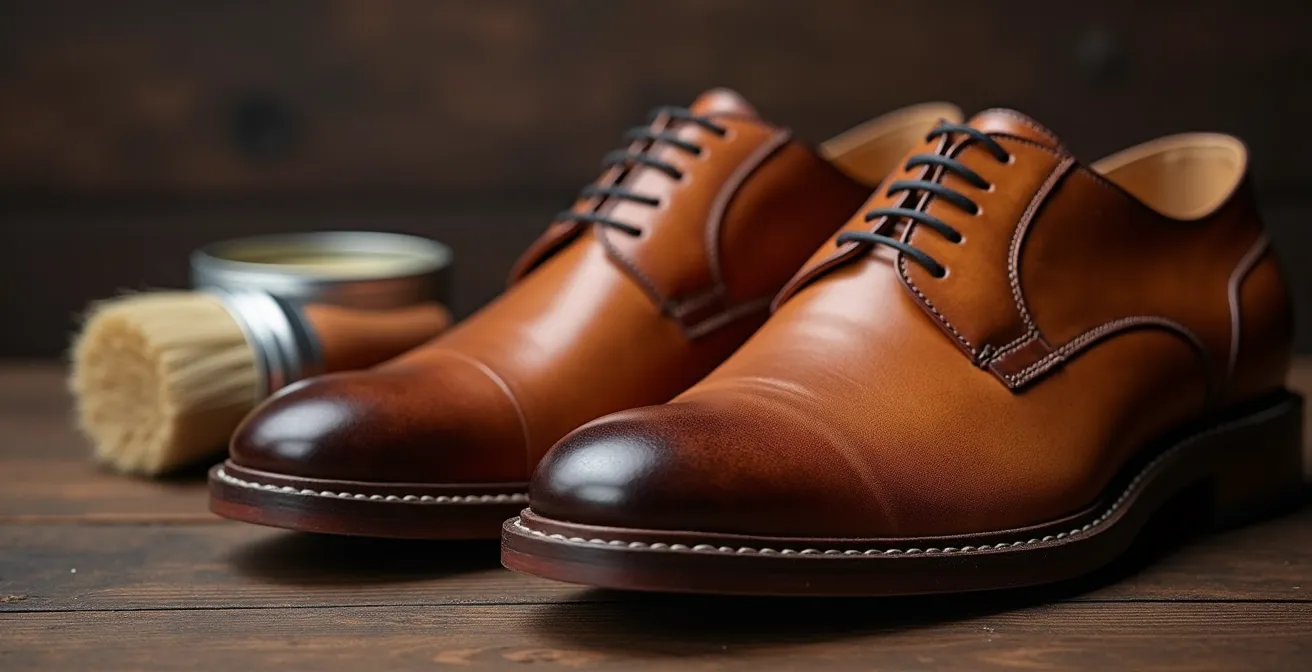
Beyond emergency repairs, a proactive care routine is essential. As this image suggests, having the right tools makes all the difference. A quality care kit doesn’t have to be expensive. Essentials like saddle soap for deep cleaning, a horsehair brush for buffing, and a neutral cream polish can restore and protect any color of leather. Regularly using cedar shoe trees is another non-negotiable step; they absorb moisture, prevent creasing, and help your shoes maintain their structural integrity for years.
This commitment to care elevates your entire look. When your shoes are clean, conditioned, and properly stored, they project an image of quality and forethought, regardless of their original price tag.
Belt and Shoe Rule: When Is It Okay to Break the Match?
The age-old rule to “always match your belt to your shoes” is one of the first style guidelines many people learn. It’s a safe, reliable way to look put-together, and for formal business settings, it remains a smart choice. However, in a modern style context, rigidly adhering to this rule can sometimes look dated or unimaginative. The new measure of elegance is intentionality. Breaking the rule can look far more sophisticated than following it, *if* it’s done with purpose.
The modern approach is about creating a cohesive look through complementary tones and textures, rather than exact matches. For instance, you could pair dark brown suede shoes with a slightly lighter tan leather belt. The shared color family creates harmony, while the difference in texture adds visual interest. Another advanced technique is to match your belt to another accessory, like your watch strap or bag. This creates a subtle thread of continuity that is both polished and unexpected.
The following table breaks down when to stick to tradition and when to embrace a more contemporary approach.
| Traditional Rule | Modern Approach | When to Apply |
|---|---|---|
| Belt matches shoes exactly | Belt matches watch or bag hardware | Business casual, creative industries |
| All leather same color | Mix textures (suede belt, leather shoes) | Weekend wear, fashion-forward events |
| Always wear a belt | Perfect tailoring eliminates belt need | Minimalist looks, high-end occasions |
| Match all metals | Intentional metal mixing (80/20 rule) | Contemporary styling, layered accessories |
Stylist Brooke Haskell of “The Perennial Prepster Style Guide” offers a useful framework for this:
You’ve probably heard of the ‘sandwich method’ before, but if you haven’t, it’s all about matching your bag to your belt or shoes. It’s an effortless way to create a cohesive look and make your outfit feel more intentional. For instance, if you’re wearing brown leather loafers, pair them with a brown leather belt and bag.
– Brooke Haskell, The Perennial Prepster Style Guide
Ultimately, whether you match or mix, the goal is for the choice to feel deliberate. This confidence in your decision is what truly reads as expensive.
Apple Watch vs Dress Watch: What Your Wristwear Says About You
Your choice of watch is one of the most personal and telling accessory decisions you can make. It’s a small piece of real estate on your wrist that speaks volumes about your lifestyle, priorities, and aesthetic. In today’s world, the primary debate is between the high-tech functionality of a smartwatch, like an Apple Watch, and the timeless elegance of a classic dress watch. Neither is inherently “better,” but choosing the right one for the right context is key to an elevated look.
A classic dress watch, with its simple face and leather or metal bracelet, signals tradition, craftsmanship, and an appreciation for enduring style. It’s the undisputed champion for formal occasions, business meetings, and any event where you want to project an air of quiet confidence. A smartwatch, on the other hand, communicates efficiency, modernity, and a connection to the digital world. While incredibly practical, its glowing screen and sporty aesthetic can sometimes clash with more formal or classic attire, potentially undermining an otherwise polished look.
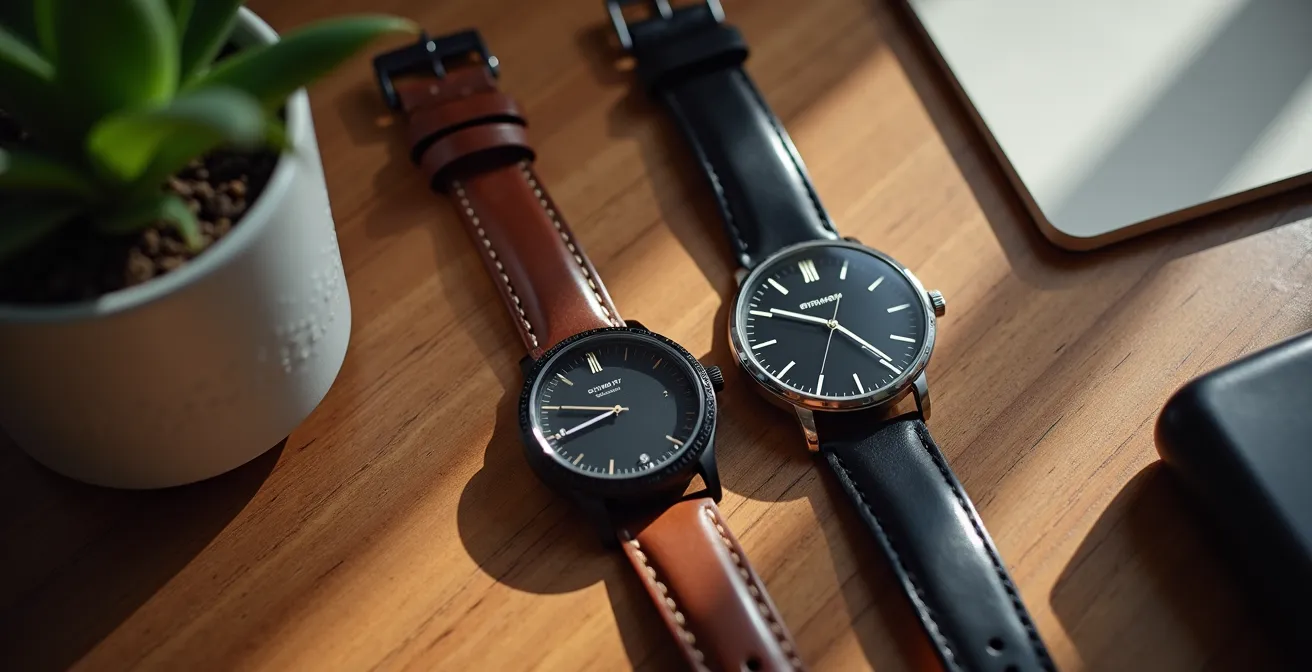
The key to making either choice look expensive is, once again, intentionality. If you opt for a smartwatch, elevate it by investing in a high-quality strap. A generic silicone band is fine for the gym, but a well-made leather or Milanese loop strap instantly upgrades its appearance, bridging the gap between tech and tradition. As the image shows, a premium strap can make a smartwatch hold its own against a classic timepiece. Conversely, a cheap-looking strap on a beautiful dress watch will cheapen the entire piece.
Your watch should complement your outfit, not compete with it. Whether you choose classic or connected, ensure the choice is deliberate and the materials are as refined as possible. That considered choice is the hallmark of true style.
Windsor vs Four-in-Hand: Which Knot Fits Your Shirt Collar?
For those who wear ties, the knot is a detail so small it’s often overlooked, yet it’s one of the most powerful signals of sartorial know-how. Choosing the right knot isn’t about preference; it’s about proportion and what stylists call visual weight. A large, symmetrical knot like the Full Windsor has significant visual weight and demands a wide-collared shirt. Pairing it with a narrow-collared shirt creates a clumsy, unbalanced look. Conversely, a slim, asymmetrical Four-in-Hand knot has less visual weight and perfectly complements a standard or narrow point collar.
Matching the knot’s size and shape to your collar’s spread is a non-negotiable principle for a polished appearance. An analysis noted that professionals who harmonized their tie knot with their suit’s fabric weight appeared more cohesive. Heavy wool suits felt balanced with a substantial Windsor, while lightweight blazers looked better with a slimmer Four-in-Hand. This principle of consistent visual weight across all elements creates an expensive-looking harmony.
The Four-in-Hand is often favored by style insiders for its slight asymmetry, which adds a touch of personality and effortless elegance, a concept the Italians call sprezzatura. Mastering this knot, complete with a perfect “dimple,” is a sign of a confident dresser. The dimple—that small fold of fabric just below the knot—is not an accident; it’s a deliberate detail that adds depth and texture, showing you care about the finer points. A tie without a dimple looks flat and lifeless, a clear giveaway of an amateur.
Your Plan for the Perfect Tie Dimple
- Start with the Four-in-Hand knot for its natural asymmetry.
- Before tightening the final loop, pinch the tie fabric just below the knot to create a channel.
- Use your index finger to press into the channel, forming the dimple, as you slide the knot up to your collar.
- Adjust the dimple’s depth; a deeper fold is more formal, while a subtle one suits business casual.
- Secure the dimple by gently pulling on the narrow end of the tie while holding the knot in place.
By mastering the right knot for your collar and perfecting the dimple, you send a clear message: you understand the rules of proportion and appreciate the craft of dressing well.
The Seam Test: How to Spot Cheap Quality in Expensive Brands?
Even with a high price tag, not all accessories are created equal. The ability to discern true quality from clever marketing is a crucial skill for looking expensive on a budget. Instead of being swayed by a logo, train your eye to look for signs of superior construction. The secret lies in examining the “invisible” components: the hardware, the stitching, and the overall structural integrity of a piece. These elements reveal far more about an accessory’s longevity and value than the brand name ever could.
Start with the hardware. On a handbag, belt, or watch, quality metal should feel cool to the touch and have a satisfying weight. Zippers should glide smoothly without catching; YKK is often a good sign but inspect the pull tab and teeth for sturdiness. Clasps and buckles should click into place securely with no wobbling or rattling. Examine the plating—it should be even and consistent, with no signs of flaking or discoloration, especially around the edges. These small tests separate well-made pieces from those designed to look good only on the shelf.
As style expert Ainura notes in VegOut Magazine, it’s about the form:
The key is structure. Soft, slouchy bags can look casual, but a bag that holds its shape reads as expensive. Look for clean lines and minimal hardware. You want something that looks intentional, not trendy.
– Ainura, VegOut Magazine Style Guide
This “seam test” extends to the stitching. On leather goods, look for a high stitch density—at least 8 to 10 stitches per inch is a good benchmark. The lines should be straight, even, and consistent. Pay close attention to stress points, like where a bag’s handles connect to the body or the holes on a belt. Quality pieces will have reinforced, often double-stitched, seams in these areas.
Action Plan: Your Hardware Integrity Checklist
- Check zipper weight and smoothness: YKK zippers are a quality indicator, but test the pull.
- Test clasps and closures: They should click securely without wobbling or feeling loose.
- Examine buckle plating: Look for an even coating without any flaking or discoloration.
- Inspect stitching density: Aim for a minimum of 8-10 stitches per inch on leather goods.
- Feel hardware temperature: Quality metal feels cool and substantial to the touch, not like plastic.
By focusing on construction over branding, you’ll build a collection of accessories that not only look expensive but are built to last, providing a foundation of quality for any outfit.
The 5-Minute Grooming Details That Elevate a Cheap Outfit
Accessories don’t exist in a vacuum; they are framed by you. The most exquisite watch or finest silk tie can be completely undermined by neglected personal grooming. While a 2024 survey found that Americans spend about $120 per month on clothes and accessories, the most impactful investments in your appearance are often the least expensive. A simple, 5-minute grooming routine can have a greater effect on your perceived polish than any single item you can buy.
Start with your hands. They are almost always in view, drawing attention to your watch, bracelets, or rings. Clean, neatly filed nails are non-negotiable. This doesn’t require a professional manicure; it simply requires a few moments with a nail file and buffer. Similarly, moisturized hands and cuticles prevent a dry, ashy appearance that can make even the finest jewelry look out of place. This small detail communicates health and attention to detail.
Next, consider the “frame” of your face. Well-groomed eyebrows provide a clean structure for your features, especially if you wear glasses or sunglasses. This doesn’t mean they need to be perfectly sculpted, but simply tamed and neat. Another subtle but powerful detail is your scent. The goal isn’t to be noticed from across the room, but to have a subtle, pleasant signature scent that is only detectable up close. One or two sprays of a quality fragrance is the essence of understated luxury. Finally, never underestimate the power of a lint roller on dark fabrics or a quick steam on a wrinkled shirt. These small actions show that you care about your presentation from head to toe.
Grooming is the invisible accessory that ties everything together. It costs very little but yields an enormous return in elevating your entire presence, making everything you wear look more considered and valuable.
Key Takeaways
- True elegance comes from mastering principles like visual weight and intentionality, not from high price tags.
- The quality of an accessory is found in its structural integrity—stitching, hardware, and material—not its logo.
- Meticulous care and grooming are the most powerful (and affordable) tools for elevating any outfit.
Made-to-Measure vs Bespoke: Is the Extra $1000 Worth It?
The conversation around bespoke and made-to-measure often centers on suits, but the underlying principle applies to your entire appearance: a perfect fit is the ultimate luxury. While custom-made accessories are beyond most budgets, you can achieve a “bespoke” effect for free. The most valuable accessory you own is your posture. It costs nothing, but it fundamentally changes how clothes hang on your body and how you are perceived by others.
Standing tall with your shoulders back and your chin level does more for your outfit than any designer piece. It signals confidence, poise, and self-respect. A cheap blazer on a person with excellent posture will look a hundred times better than a $5,000 suit on someone who is slouching. This is the “bespoke tailoring” you give yourself. It creates clean lines, allows fabric to drape correctly, and projects an aura of command that is impossible to buy.
As one fashion psychology expert eloquently puts it:
Perfect posture is the ultimate free accessory. Standing tall with squared shoulders makes any outfit hang better and signals confidence – it’s bespoke tailoring you give yourself at zero cost.
– Fashion Psychology Expert, The Art of Presence in Fashion
This concept is the culmination of all the principles we’ve discussed. The harmony of metals, the patina of cared-for leather, the intentionality of a broken rule, the balance of a tie knot, the integrity of a well-made bag, and the polish of good grooming—all of these are amplified by great posture. It is the final element that integrates every detail into a single, cohesive message of self-assured style. It’s the framework that makes all your other choices look deliberate and powerful.
Before you consider your next purchase, take a moment to stand in front of a mirror and adjust your posture. That simple act is the most effective and affordable step you can take to make every outfit you own look infinitely more expensive.