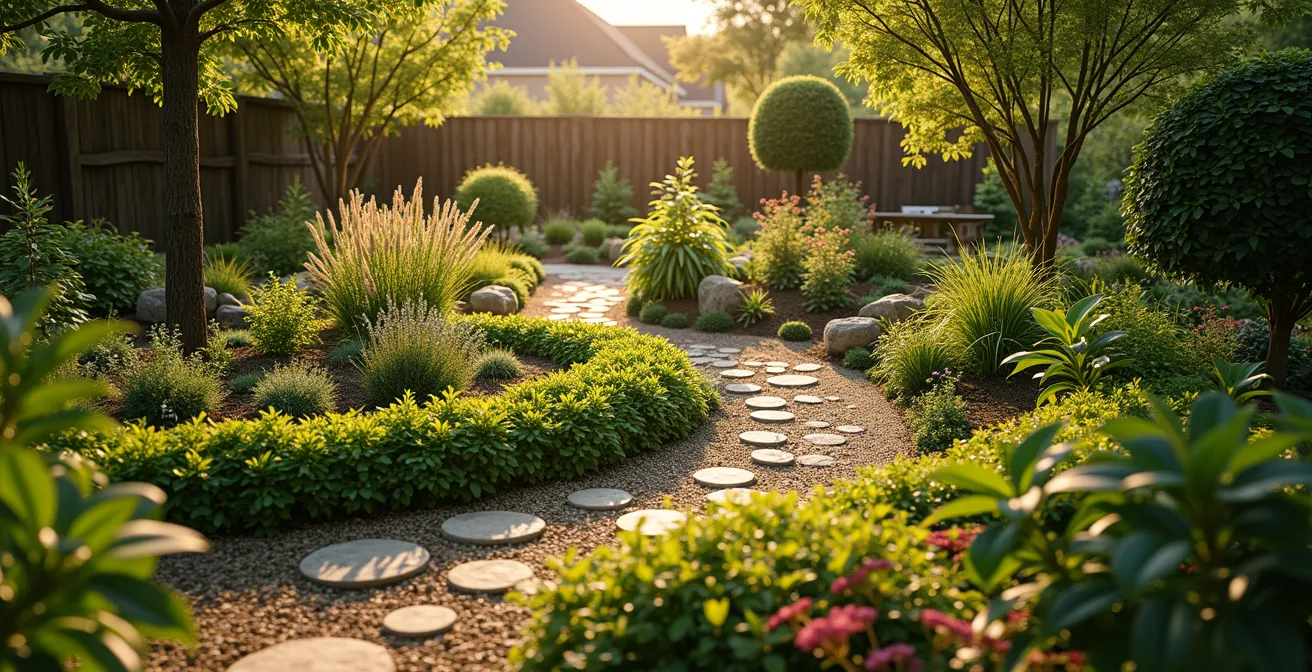
The most effective way to help garden wildlife isn’t adding feeders or hotels, but stopping the ‘tidy’ habits that destroy their invisible world.
- Tilling and excessive cleaning sever vital underground and ground-level food webs that entire ecosystems depend on.
- Artificial lights and poorly designed bee hotels can become deadly ecological traps, confusing and harming the very creatures you want to help.
Recommendation: Focus on creating permeability and preserving natural processes—your garden’s greatest strength is its managed ‘wildness’, which allows life to move through it freely.
For many nature lovers, a garden is a canvas for conservation, a small patch of the world where we can give back. We put out birdbaths, plant flowers for pollinators, and maybe even install a charming bug hotel. These are acts of kindness, born from a desire to support the local fauna that brings us so much joy. We see our gardens as sanctuaries, isolated havens in a fragmented landscape. But what if this very perspective is flawed? What if our well-intentioned actions are sometimes part of the problem, and our quest for a tidy, picturesque haven inadvertently creates a beautiful prison?
The real secret to a wildlife-friendly garden lies not in what we add, but in what we choose not to destroy. It’s about recognizing that our gardens are not islands, but potential bridges—or barriers—in a larger network of wildlife corridors. True conservation gardening is about understanding the unseen consequences of our most common habits. It involves a shift in perspective: from ‘curating’ a space to ‘facilitating’ a system, protecting the invisible infrastructure of life that already exists beneath our feet and in the decaying leaves we are so quick to tidy away.
This article will guide you through the crucial, often-overlooked principles of gardening for connectivity. We will explore how conventional practices can sever these vital lifelines and, more importantly, how simple shifts in our approach can transform your garden from a beautiful dead-end into a thriving, life-sustaining corridor.
Summary: How to Garden Without Disrupting Local Wildlife Corridors?
- Why Tilling Your Soil Kills the Micro-Organisms That Feed Your Plants?
- Why Cleaning Your Garden Too Tidily Starves Hedgehogs in Winter?
- Solar Lights: Are They Confusing the Moths in Your Garden?
- How to Fertilize Your Lawn Without Polluting the Local Stream?
- Log Piles vs Fancy Hotels: What Do Beetles and Toads Actually Prefer?
- Bamboo Tubes: Why Your DIY Bee Hotel Might Be a Death Trap?
- Ladybug Larvae: Why You Are Mistakenly Killing Your Garden’s Best Friend?
- Three Sister Planting: Does Corn, Beans, and Squash Really Work?
Why Tilling Your Soil Kills the Micro-Organisms That Feed Your Plants?
For generations, tilling the soil has been a rite of spring for gardeners—a way to break up compacted earth, remove weeds, and prepare for planting. Yet, from a conservationist’s perspective, this annual ritual is a catastrophic event. Beneath the surface lies a complex, sprawling city of life known as the soil microbiome. Central to this is the mycelial network, a vast web of fungal threads that connects plants, transports nutrients, and forms the foundation of a healthy ecosystem. Tilling is the equivalent of an earthquake, tornado, and flood combined, shredding this delicate network and obliterating the very life that feeds your plants.
These fungal networks are not just beneficial; they are essential. They act as a living internet, allowing plants to communicate and share resources. They also play a monumental role in carbon sequestration. In fact, some studies on mycorrhizal fungi’s carbon storage show that these networks may store up to 36% of annual global carbon emissions from fossil fuels. When we till, we release this stored carbon and destroy the system’s ability to capture more. Studies in France and the UK have confirmed that no-till farming practices result in more robust mycorrhizal populations, which in turn reduces the need for nitrogen fertilizers and helps prevent soil erosion.
Adopting a “no-dig” or “no-till” approach is the single most powerful way to protect this invisible infrastructure. Instead of turning the soil over, you can:
- Use a broadfork to aerate soil without destroying its structure.
- Leave plant roots in the ground after harvesting to feed the soil life.
- Apply layers of organic mulch and compost to the surface, mimicking a natural forest floor.
- Use cover crops during fallow periods to keep the soil network active.
This method of ‘intentional neglect’ preserves the vital corridors beneath the ground, fostering a resilient garden that is less dependent on external inputs and far more hospitable to life.
Why Cleaning Your Garden Too Tidily Starves Hedgehogs in Winter?
A tidy garden, with its neat edges, bare soil, and pruned-back perennials, is a deeply ingrained aesthetic. But to wildlife, it is a desert. The leaves we rake, the stems we cut, and the brush we burn are not waste; they are critical resources for shelter and food, especially during the harsh winter months. Our obsession with tidiness directly threatens the survival of countless creatures, from hedgehogs seeking a place to hibernate to queen bumblebees needing a safe spot to overwinter.
Consider the humble leaf pile. To us, it might look messy. To a hedgehog, it’s a five-star hotel, providing the insulation needed to survive freezing temperatures. Hollow stems of last year’s flowers are nesting sites for solitary bees, while a standing seed head is a life-saving winter pantry for finches and other birds. When we “clean up” in the autumn, we are effectively evicting countless residents and bulldozing their homes and food supplies just as they need them most. This desire for neatness creates an impenetrable barrier in the wildlife corridor, forcing animals into more dangerous, exposed areas.
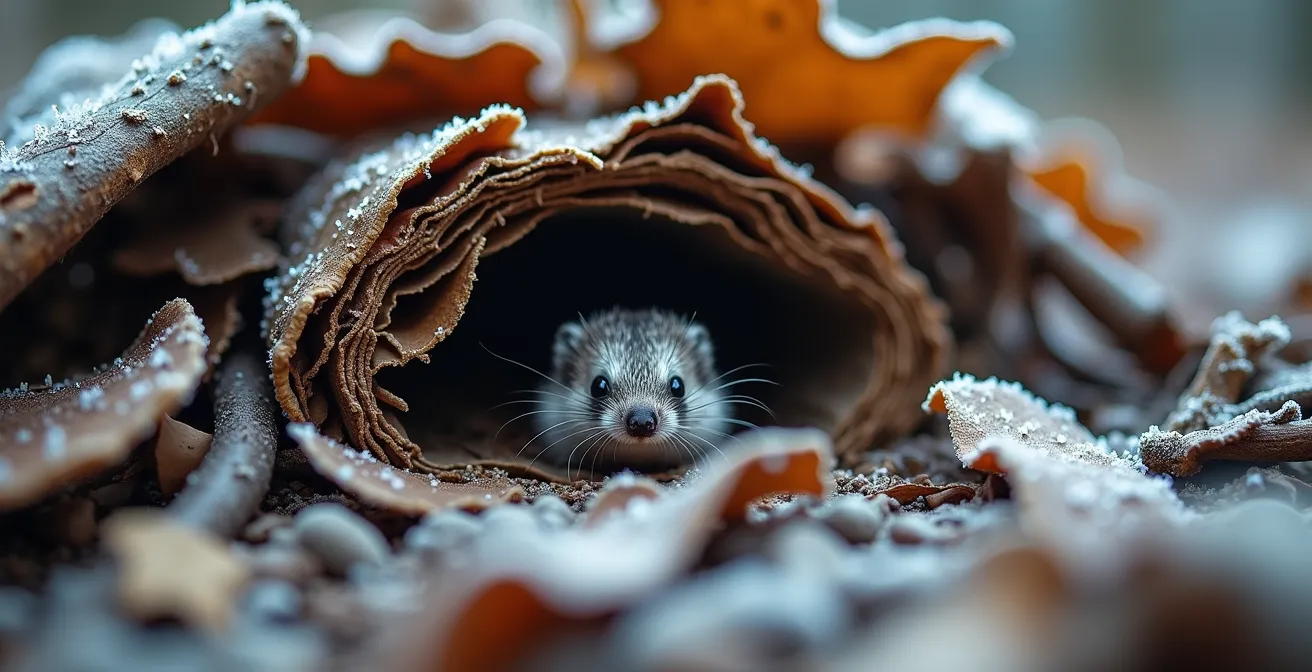
As the image above illustrates, a winter garden’s “mess” is a complex, layered habitat. The solution is not to let the garden run completely wild, but to adopt a more strategic and compassionate cleanup schedule. Delaying your main garden cleanup until late spring, when temperatures are consistently above 10°C (50°F), gives overwintering insects a chance to emerge. Creating dedicated, undisturbed log and leaf piles in corners of the garden provides permanent refuge. This approach transforms yard waste into a valuable habitat asset.
By comparing traditional methods with a wildlife-first approach, the benefits become clear. The following timeline, based on guidance from conservation groups, offers a path to a garden that works with nature’s cycles, not against them. A simple 13x13cm hole at the base of a fence, known as a ‘hedgehog highway’, can also make a world of difference, ensuring these creatures can roam freely between gardens.
| Season | Traditional Cleanup | Wildlife-Safe Approach | Species Protected |
|---|---|---|---|
| Fall | Cut back all perennials, remove leaves | Leave seed heads standing, create leaf pile refuges | Queen bumblebees, butterfly chrysalises, hedgehogs |
| Winter | Clear all debris, prune everything | Maintain brush piles, keep hollow stems intact | Overwintering insects, amphibians, small mammals |
| Early Spring | First cleanup at thaw | Wait until temperatures consistently above 50°F (10°C) | Native bees emerging, firefly larvae |
| Late Spring | Complete garden reset | Chop and drop prunings as mulch, maintain soft edges | Ground-nesting birds, beneficial predators |
Solar Lights: Are They Confusing the Moths in Your Garden?
Yes, they often are. Solar-powered lights have become a popular, energy-efficient way to illuminate garden paths and features. However, for the vast nocturnal world that comes alive after dusk, this artificial light can be disorienting and even deadly. This phenomenon, known as photopollution, is a major disruptor of wildlife corridors. Moths and other nocturnal insects, which are crucial pollinators and a vital food source for birds and bats, navigate by the moon and stars. The bright, blue-white glare of a typical solar LED acts like a supermoon, luring them in, exhausting them, and making them easy prey. It turns a safe corridor into a fatal trap.
This systemic disruption goes beyond a few dead moths. It can prevent nocturnal pollinators from doing their job, affecting plant reproduction. It can disrupt the hunting patterns of predators like bats and the breeding cycles of amphibians. Habitat fragmentation is a primary driver of species loss, and creating islands of artificial light in the darkness contributes significantly to this problem. In a stark warning, the Intergovernmental Panel on Climate Change predicts that 40-70% of species could go extinct this century without the ability to move through connected landscapes—a movement that artificial light can halt. Our desire for a lit garden path directly interferes with this essential freedom.
Protecting the darkness in your garden is as important as any other conservation action. This doesn’t mean stumbling around in the pitch black. It means lighting with intention and awareness, using only what is necessary and choosing wildlife-friendly options. The goal is to create “dark corridors” within your garden, preserving stretches of genuine darkness for wildlife to travel through unhindered.
Action Plan: Implementing Dark-Sky Compliant Lighting
- Choose amber or red wavelength lights over the blue/white spectrum to minimize insect attraction.
- Install shields on all fixtures to direct light downward and prevent upward light pollution.
- Use motion-activated lighting instead of always-on fixtures for pathways and entrances.
- Position lights low to the ground rather than on high posts to reduce their visibility range.
- Commit to keeping large sections of your garden, especially those bordering wilder areas, completely unlit.
How to Fertilize Your Lawn Without Polluting the Local Stream?
The perfect, emerald-green lawn is an icon of suburbia, often maintained with a steady diet of chemical fertilizers. While these products deliver nitrogen for lush growth, their impact extends far beyond the garden fence. Every time it rains, excess nutrients that the grass doesn’t absorb are washed away, entering storm drains and eventually ending up in local streams, rivers, and ponds. This nutrient runoff triggers a destructive process called eutrophication, where algae blooms explode, consume all the oxygen in the water, and create “dead zones” where fish and other aquatic life cannot survive.
Your lawn is not an isolated entity; it is part of a local watershed. The chemicals you apply can have a direct, harmful impact on the downstream ecosystem, effectively poisoning the wildlife corridor at its source. Fortunately, protecting our waterways doesn’t require abandoning a green space. The first step is to reduce or eliminate synthetic fertilizers, opting instead for slow-release organic options like compost. But the most powerful solution is to rethink the lawn itself. By reducing the size of your lawn and replacing it with more diverse, less demanding plantings, you create a garden that is both a habitat and a natural filtration system.
Residents in places like Nebraska are demonstrating how gardens can become part of the solution, installing small ponds with gentle slopes and native aquatic plants. These features not only provide a safe water source for wildlife but also help capture and filter runoff, preventing pollutants from leaving the property. Replacing turfgrass with a variety of groundcovers and meadows offers a more systemic, low-maintenance solution that benefits both your garden and the wider environment.
| Alternative | Water Requirements | Wildlife Benefits | Maintenance Level |
|---|---|---|---|
| Clover lawn | Low once established | Nitrogen-fixing, pollinator food source | Minimal mowing |
| Native grass meadow | Very low | Habitat for ground-nesting birds, insects | Annual or biannual cut |
| Moss garden | Moderate in shade | Amphibian habitat, moisture retention | No mowing required |
| Wildflower meadow | Low after establishment | Maximum pollinator support, seed source | Seasonal management |
Log Piles vs Fancy Hotels: What Do Beetles and Toads Actually Prefer?
The market for “insect hotels” has exploded, with gardeners eager to provide shelter for beneficial bugs. While the intention is noble, many commercially produced hotels are poorly designed and offer little real value. The true five-star accommodation for a vast array of garden wildlife is far simpler, cheaper, and more effective: a log pile. A stack of logs, branches, and other woody debris, often called deadwood, is one of the most valuable habitats you can create. It is a bustling metropolis that fancy, drilled blocks of wood simply cannot replicate.
As wood decays, it offers a constantly changing menu of resources. The bark provides shelter for beetles and spiders. The moist, decaying heartwood is a feast for fungi and invertebrates, which in turn become food for birds. The cool, damp spaces between logs are perfect daytime retreats for toads, salamanders, and even snakes, which emerge at night to help control slugs and other pests. A log pile is a slow-release ecosystem, providing food and shelter across all seasons for years. As demonstrated by gardeners in Nebraska, even a simple stack of pruned branches can create instant shelter for rabbits and ground-nesting birds.
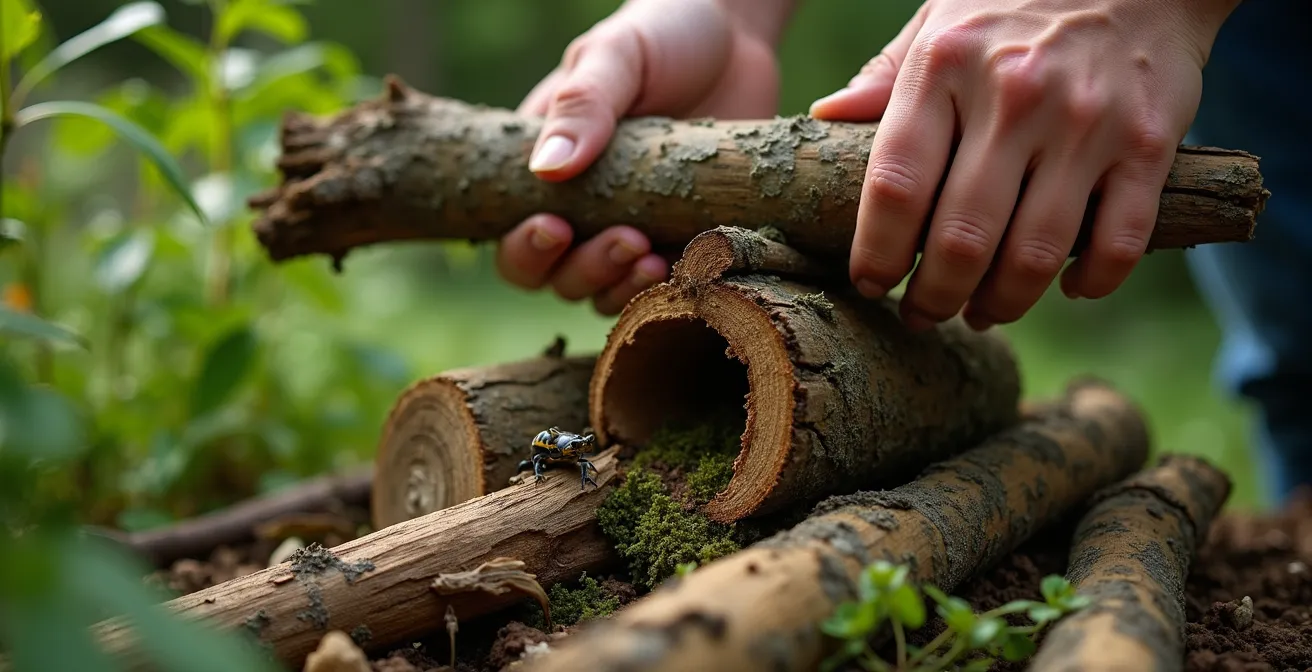
Creating a deadwood habitat is an act of “productive laziness.” Instead of hauling away pruned branches or fallen limbs, simply pile them in a quiet, shady corner of the garden. The process is free and requires zero maintenance. You are simultaneously diverting waste from landfills and creating a critical link in your garden’s wildlife corridor. This simple structure provides a safe haven from predators and weather, allowing a huge diversity of life to thrive and move through your landscape safely.
Bamboo Tubes: Why Your DIY Bee Hotel Might Be a Death Trap?
As Adrian Thomas, a wildlife gardening expert at the RSPB, points out, many animals need to roam far and wide: “Each night they can roam for a mile or more in search of food, a mate or somewhere safe to raise a family, but fences and walls can stop them in their tracks.” While this applies to hedgehogs, the principle of providing safe, appropriate shelter is just as critical for our vital pollinators. Unfortunately, many popular DIY and store-bought bee hotels, especially those using bamboo canes, can become ecological traps.
The problem lies in their design. Bamboo tubes are often too wide, have splintery interiors that can damage delicate wings, and are open at both ends, creating a stressful wind tunnel. Most critically, they cannot be cleaned. After a season of use, these tubes become a breeding ground for parasites, mould, and disease, which can decimate the next generation of bee larvae. A hotel that isn’t replaced or cleaned annually can do more harm than good, becoming a death trap instead of a nursery.
Creating a safe nesting site is about understanding the specific needs of solitary bees. They require a dry, secure, and clean environment. The best hotels use materials that can be easily managed and replaced. Rather than a permanent structure, think of it as a renewable resource.
- Use replaceable cardboard tubes or bundles of natural reeds instead of permanent bamboo.
- Ensure all drilled holes and tubes have a solid, sealed back.
- Drill holes of varying diameters (3-10mm) into a solid block of untreated wood, but not all the way through.
- Mount the hotel in a sunny spot, protected from rain, at least 1.5 meters off the ground.
- Most importantly, replace the nesting materials every year to prevent parasite buildup.
An even better strategy is to let nature do the work by leaving the hollow or pithy stems of plants like sunflowers, raspberries, and fennel standing over winter.
Ladybug Larvae: Why You Are Mistakenly Killing Your Garden’s Best Friend?
You see a spiky, black-and-orange creature that looks like a tiny alligator crawling on your prized roses. Your first instinct might be to panic and squash it, assuming it’s a pest. In doing so, you would be killing one of your garden’s greatest allies: a ladybug larva. This common case of mistaken identity highlights a critical gap in many gardeners’ knowledge—the inability to recognize the juvenile stages of beneficial insects. By failing to do so, we inadvertently break a key link in our garden’s natural pest control system, disrupting the predator-prey balance.
A single ladybug larva can consume hundreds of aphids before it pupates into the familiar red-and-black beetle. They are far more voracious predators than the adults. By killing them, we are eliminating our most effective aphid-control team. The same applies to the larvae of hoverflies, lacewings, and many other beneficial predators. A garden teeming with these predators requires no chemical pesticides. But to foster them, we must provide a safe and continuous habitat—a corridor that connects them to their food sources.
The foundation of this system is the very insects we often consider “pests.” As entomologist Douglas Tallamy’s research reveals, plant-eating insects comprise 37 percent of all terrestrial animal species. They are not the enemy; they are the primary food source that supports the entire food web, from predatory insects to birds. To have the predators, you must tolerate a certain population of prey. Creating a balanced environment is impossible if predators like garter snakes or salamanders can’t move freely through your yard because it’s surrounded by a “moat” of sterile lawn. A diverse planting with plenty of cover allows these predators to come and go, keeping pest populations naturally in check.
Key Takeaways
- The invisible world of soil fungi is the true foundation of a healthy garden; protect it by avoiding tilling.
- ‘Messiness’ is habitat. Leaf litter, deadwood, and standing stems provide essential food and shelter for overwintering wildlife.
- Your garden is not an island. Artificial light, chemical runoff, and physical barriers disrupt the vital corridors that wildlife needs to survive.
Three Sister Planting: Does Corn, Beans, and Squash Really Work?
The “Three Sisters” is a traditional agricultural system practiced by various Indigenous peoples of North America. It involves strategically interplanting corn, beans, and squash in a symbiotic guild. The corn provides a tall stalk for the beans to climb. The beans fix nitrogen in the soil, benefiting all three plants. The large, sprawling leaves of the squash create a living mulch, suppressing weeds and keeping the soil cool and moist. Yes, it absolutely works, but its true genius lies not just in the specific plants used, but in the principle it embodies: creating a multi-layered, cooperative polyculture guild that functions as a complete ecosystem.
This ancient technique is the ultimate model for a wildlife corridor at the micro-level. It creates vertical corridors (corn stalks), ground-level corridors (squash leaves), and even subterranean corridors (bean roots interacting with soil microbes). This dense, multi-story habitat provides diverse food sources and a complex microclimate that supports a much wider range of insects and animals than a simple monoculture row of vegetables ever could. The lesson for the modern conservation gardener is not necessarily to plant only corn, beans, and squash, but to adopt the underlying philosophy of stacking functions and creating diverse plant communities.
As author and ecologist Douglas Tallamy writes, “Backyard by backyard, neighborhood by neighborhood, when gardeners add native plants to their landscapes they create stepping stones connecting formerly isolated habitat islands.” The Three Sisters method is a perfect example of how to build one of those stepping stones. By moving away from neat, separated rows and embracing integrated, multi-species plantings—whether it’s a fruit tree underplanted with comfrey and herbs or a sunflower-pea-clover guild—we create resilient, productive, and life-sustaining pockets of wilderness that bridge the gaps in our fragmented world.
Transforming your garden begins with a change in mindset. Start today by choosing one “tidy” habit to abandon. Leave the leaves in one corner, turn off one solar light, or skip tilling one garden bed. By taking these small steps to preserve the natural systems at play, you can begin to weave your garden back into the beautiful, intricate tapestry of the wider world.