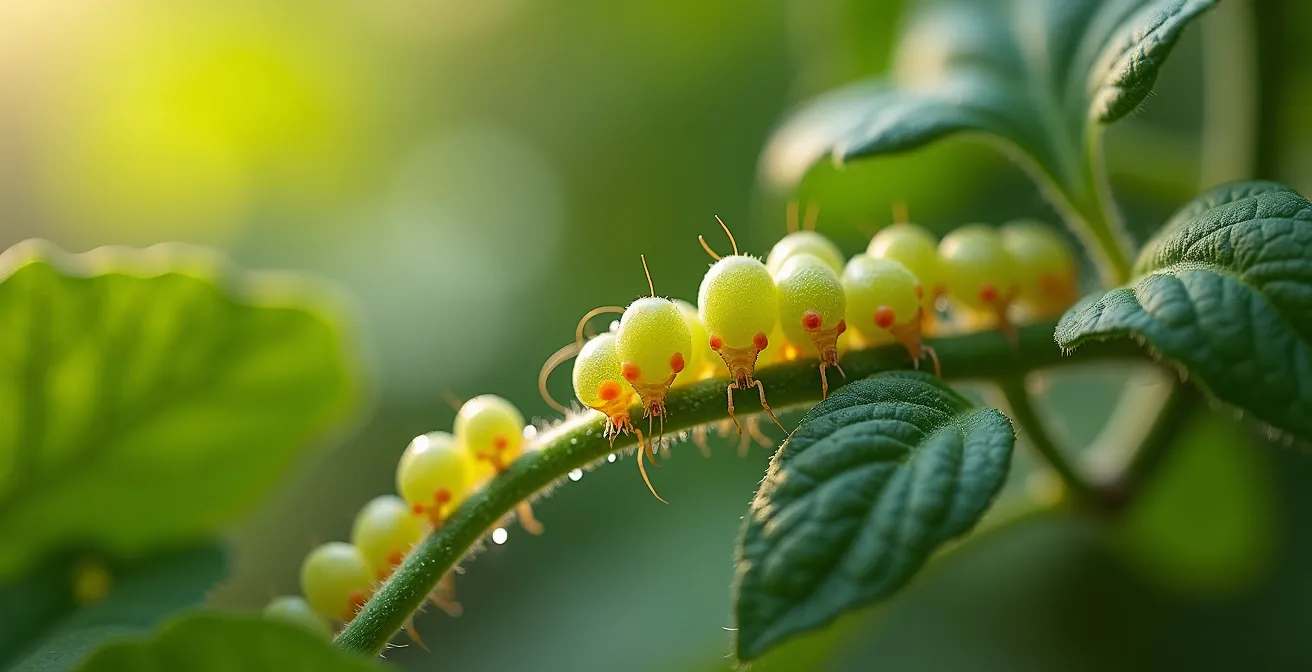
The best way to control aphids isn’t by spraying them, but by making your garden an inhospitable place for them to thrive in the first place.
- Healthy, living soil and a robust population of predator insects are a far stronger defense than any chemical spray.
- Over-fertilizing with high-nitrogen, synthetic products like Miracle-Gro actively attracts and feeds aphid populations, creating the problem you’re trying to solve.
Recommendation: Shift your focus from “pest eradication” to “ecosystem cultivation” for a more resilient and productive tomato patch.
There’s a moment of dread every gardener knows: you flip over a tomato leaf to find a teeming colony of aphids, their tiny bodies sucking the life from your prized plant. The immediate instinct is to reach for a spray bottle, to declare war and eradicate the invaders. Common advice reinforces this, suggesting everything from soapy water to powerful pesticides. But this reactive approach often traps gardeners in an endless cycle of spraying, damaging beneficial insects, and never addressing the root cause.
What if the presence of aphids isn’t the problem, but a symptom? What if they are simply an indicator of a deeper imbalance in your garden’s ecosystem? This is the perspective of an Integrated Pest Management (IPM) scout. Instead of focusing solely on killing pests, a scout’s mission is to understand the entire ecological battlefield. The true key to a healthy tomato crop lies not in what you spray, but in the systemic resilience you build from the soil up.
This guide reframes aphid control. We will move away from the emergency spray-down and toward a tactical, proactive strategy. You’ll learn to see your garden as a dynamic system where you can cultivate allies, set traps, and manipulate the environment to your advantage. It’s about making your garden so strong and full of defenders that aphids are never more than a minor nuisance, not a crop-destroying threat.
By understanding the “why” behind each technique—why healthy soil repels pests, why the timing of a spray matters more than the spray itself—you can transition from being a firefighter to being a strategic commander of your garden’s health. The following sections provide the intelligence you need to build this resilient ecosystem.
Table of Contents: A Scout’s Manual for an Aphid-Resistant Tomato Patch
- Ladybug Larvae: Why You Are Mistakenly Killing Your Garden’s Best Friend?
- Neem Oil: Why Spraying at Noon Burns Your Plants?
- Nasturtiums: How to Sacrifice One Plant to Save the Rest?
- Why Weak Soil Attracts More Pests than Healthy Soil?
- Nitrogen Overload: Are You Feeding the Pests with Too Much Miracle-Gro?
- Marigolds and Onions: The Scent Barrier That Confuses Carrot Flies
- Why Tilling Your Soil Kills the Micro-Organisms That Feed Your Plants?
- Compost Tea: When Should You Brew It for Maximum Effect?
Ladybug Larvae: Why You Are Mistakenly Killing Your Garden’s Best Friend?
When you see a pest, the impulse is to spray. But in your haste, you may be committing a fatal error: killing your most effective allies. The most common casualties are the larval stages of beneficial insects, which often look nothing like their adult forms. A prime example is the ladybug larva. Before it becomes the familiar red, spotted beetle, it exists as a tiny, alligator-like creature that is the most voracious aphid predator in your garden. Recognizing and protecting these larvae is your first tactical advantage.
Many gardeners, seeing these strange “bugs,” assume they are another pest and eliminate them, unknowingly wiping out their own private army. A single ladybug larva can consume up to 50 aphids per day. Cultivating a population of these predators is far more effective than any spray. Field trials from the University of Kentucky Extension have shown that maintaining these beneficial insect populations can reduce the need for pesticide applications by 75% in tomato fields. This isn’t just about buying and releasing adult ladybugs, which often fly away; it’s about creating a habitat that encourages them to stay, breed, and work for you.
To foster this predator population, you must provide food, water, and shelter. This means planting herbs like dill and cilantro to attract adults, providing a shallow water source, and—most importantly—tolerating a small, manageable aphid population as a food source. Without food, your predators will leave. By learning to identify and protect these larval allies, you shift from a mindset of “eradication” to one of predator cultivation, turning your garden into a self-regulating ecosystem.
This strategic patience allows you to build a standing army that will handle most infestations before they ever get out of control.
Neem Oil: Why Spraying at Noon Burns Your Plants?
Neem oil is often hailed as a cure-all organic pesticide, but it’s a tool that requires tactical precision. Misuse it, and you’ll cause more harm than good. The most common mistake is application timing. Spraying neem oil in direct sun or high heat can cause phytotoxicity, a chemical burn that damages leaves, stresses the plant, and makes it even more vulnerable to pests and diseases. The oil coats the leaf and, when super-heated by the sun, essentially “fries” the plant tissue.
A scout’s approach to neem oil is surgical. It should only be applied under specific, safe conditions: at dawn or dusk, when temperatures are below 85°F (30°C), and never on plants that are already stressed from lack of water. These parameters prevent the oil from heating up on the leaf surface and causing burns. The goal of using an oil-based spray is to suffocate soft-bodied insects like aphids, not to scorch your plant’s foliage. Applying it correctly ensures you target the pest without creating collateral damage.
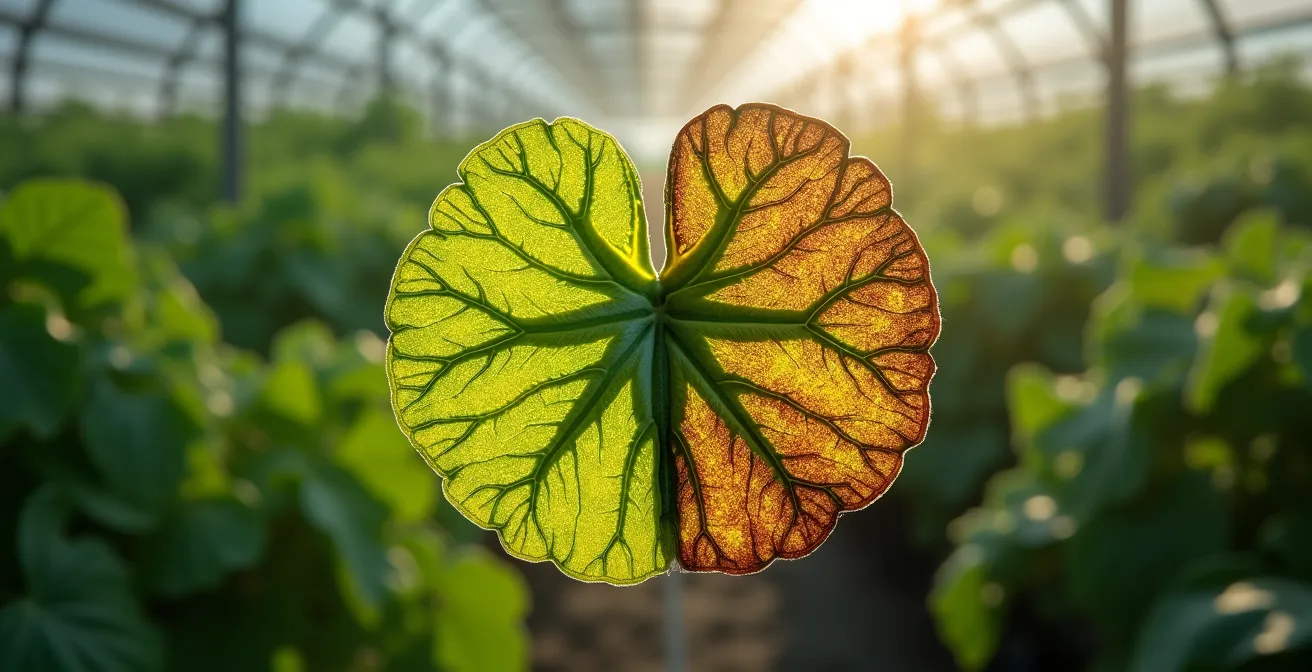
As the image clearly shows, the difference between a healthy leaf and one damaged by improper application is stark. Understanding the environmental factors is crucial. The table below outlines the clear operational boundaries for using this tool effectively. Ignoring these conditions is a tactical blunder that weakens your own defenses.
This table, based on guidelines from horticultural experts, serves as a pre-flight checklist before any application. According to an analysis of best practices for tomato plants, respecting these factors is non-negotiable for plant health.
| Application Factor | Safe Conditions | Dangerous Conditions |
|---|---|---|
| Time of Day | Dawn (before 7 AM) or Dusk (after 6 PM) | Noon to 3 PM (peak UV hours) |
| Temperature | Below 85°F (30°C) | Above 85°F (30°C) |
| Weather | Overcast or cloudy | Full sun exposure |
| Plant Stress Level | Well-watered, healthy plants | Drought-stressed or wilting plants |
| Concentration | 1-2% dilution | Above 3% concentration |
Ultimately, neem oil is a last-resort measure, not a first-line defense. When you do use it, do so with the precision of a specialist, not the blind force of a novice.
Nasturtiums: How to Sacrifice One Plant to Save the Rest?
A key principle of Integrated Pest Management is manipulating pest behavior to your advantage. One of the most effective ways to do this is through “trap cropping.” This tactic involves planting something that pests find more attractive than your main crop, luring them to a designated, sacrificial plant. For tomato growers, the nasturtium is the ultimate trap crop for aphids. Aphids are drawn to nasturtiums like magnets, often colonizing them completely while leaving nearby tomato plants untouched.
This isn’t just about planting them randomly; it’s a strategic deployment. By placing a border of nasturtiums a few feet away from your tomatoes, you create an interception zone. You are intentionally sacrificing these plants to protect your high-value crop. This allows you to manage the pest problem in a concentrated, predictable area. Instead of hunting for aphids all over your tomato patch, you know exactly where to look. Once the nasturtium leaves reach a set threshold of infestation (e.g., 30% coverage), the entire plant can be removed and disposed of, taking the aphid colony with it.
This proactive sacrifice prevents the exponential growth of pest populations that can quickly overwhelm a garden. Research from the University of California’s IPM program highlights the stakes; they’ve shown that unmanaged infestations can cause significant yield loss. Properly managed, a trap crop system creates a buffer that is both effective and organic. It’s a calculated loss for a much larger strategic gain. The following protocol outlines how to implement this strategy effectively:
- Plant nasturtiums 3-4 feet from the main tomato plants to act as an effective interception barrier.
- Inspect the trap crops twice a week during peak aphid season.
- Once aphid coverage on the nasturtium leaves reaches a 30% threshold, it’s time for action.
- Carefully remove the infested plants, seal them in a plastic bag to prevent aphid escape, and dispose of them away from the garden.
- Plant new nasturtiums in their place to maintain the defensive line.
By dictating where the pests congregate, you control the battlefield, minimize damage, and avoid the need for widespread chemical intervention.
Why Weak Soil Attracts More Pests than Healthy Soil?
The single most important, yet often overlooked, factor in pest management is the health of your soil. The IPM scout knows that insects are nature’s cleanup crew; they have an innate ability to target weak and stressed plants. A plant struggling in depleted, lifeless soil sends out chemical signals of distress that pests like aphids can detect from afar. Conversely, a tomato plant growing in rich, biologically active soil is brimming with vigor and has the internal resources to mount its own defense, making it far less appealing to pests.
Healthy soil is not just dirt; it is a thriving ecosystem teeming with billions of microorganisms. Among the most important are mycorrhizal fungi, which form a symbiotic relationship with plant roots. These fungi extend the plant’s root system, dramatically increasing its ability to absorb water and nutrients. In return, the plant provides sugars to the fungi. This partnership results in stronger plant cell walls, better hydration, and the production of defensive compounds that repel pests. The plant is simply too robust and well-defended for aphids to easily pierce and feed on.
The evidence is clear. Long-term studies from Washington State University demonstrate that tomato plants in soil with established mycorrhizal networks showed 65% fewer aphid infestations compared to plants in disturbed, unhealthy soil. Focusing on building soil health by adding compost, avoiding tilling, and using mulch is not just a gardening chore; it is your primary act of pest prevention. It’s about building systemic resilience from the ground up, creating plants that are inherently capable of shrugging off attacks that would devastate weaker specimens.
Before you ever think about a spray, first look down. The solution to your pest problem is very likely right under your feet.
Nitrogen Overload: Are You Feeding the Pests with Too Much Miracle-Gro?
In the quest for lush, green growth, many gardeners inadvertently roll out the red carpet for aphids. The culprit is an over-application of high-nitrogen synthetic fertilizers, such as Miracle-Gro. While these products produce rapid, dramatic greening, they do so at a cost. They force a flush of soft, sappy, weak growth that is exceptionally high in nitrogen. For an aphid, this is the equivalent of a gourmet, all-you-can-eat buffet.
Aphids’ bodies require a high ratio of nitrogen, but plant sap is relatively low in it. To get enough, they must process huge volumes of sap, excreting the excess sugar as a sticky substance called honeydew. When you flood a plant with synthetic nitrogen, you create exactly the kind of tender, nitrogen-rich foliage they are biologically programmed to seek out. You are not just feeding your plant; you are directly feeding the pests. An observant scout learns to read the plant for signs of nitrogen excess: leaves that are too dark green, rampant foliage with few flowers, and stems that are flimsy instead of sturdy.
The solution is to switch to slow-release, organic sources of fertility like compost. These materials provide a balanced diet of nutrients that the plant can absorb as needed, promoting steady, strong growth with robust cell walls. This type of growth is much harder for aphids to penetrate and less attractive to them. As an analysis from The Old Farmer’s Almanac confirms, the release rate and growth pattern stimulated by the nitrogen source directly impacts pest attraction levels.
| Nitrogen Source | Release Rate | Plant Growth Pattern | Aphid Attraction Level |
|---|---|---|---|
| Miracle-Gro (Synthetic) | Immediate (24-48 hours) | Rapid, soft, sappy growth | High – attracts within 3-5 days |
| Compost | Slow (2-4 weeks) | Steady, strong cell walls | Low – natural resistance maintained |
| Bone Meal | Moderate (1-2 weeks) | Balanced growth | Low to moderate |
| Fish Emulsion | Fast (3-5 days) | Quick but balanced | Moderate – monitor closely |
By managing your plant’s diet, you take away the primary attractant for aphid infestations and build a naturally more resilient plant.
Marigolds and Onions: The Scent Barrier That Confuses Carrot Flies
While the title mentions carrot flies, the principle of using scent as a defensive weapon is a universal IPM tactic that works brilliantly against aphid-attracting pests on tomatoes. An advanced scouting technique is companion planting, which involves strategically placing certain plants together for mutual benefit. The goal is to create a multi-layered defense system that confuses, repels, and predates pests. For tomatoes, a “three-ring defense” using chives, nasturtiums, and marigolds is incredibly effective.
Marigolds, in particular, are a powerhouse. They release a compound called pyrethrum into the soil and air, which is a natural repellent for aphids and other pests. Onions and chives emit strong sulfurous compounds that mask the scent of the tomato plants, making it harder for pests to locate their target. This “scent barrier” creates a confusing olfactory landscape for insects. At the same time, the flowers of these companion plants attract beneficial predators like parasitic wasps and hoverflies, which are deadly to aphids and tomato hornworms.
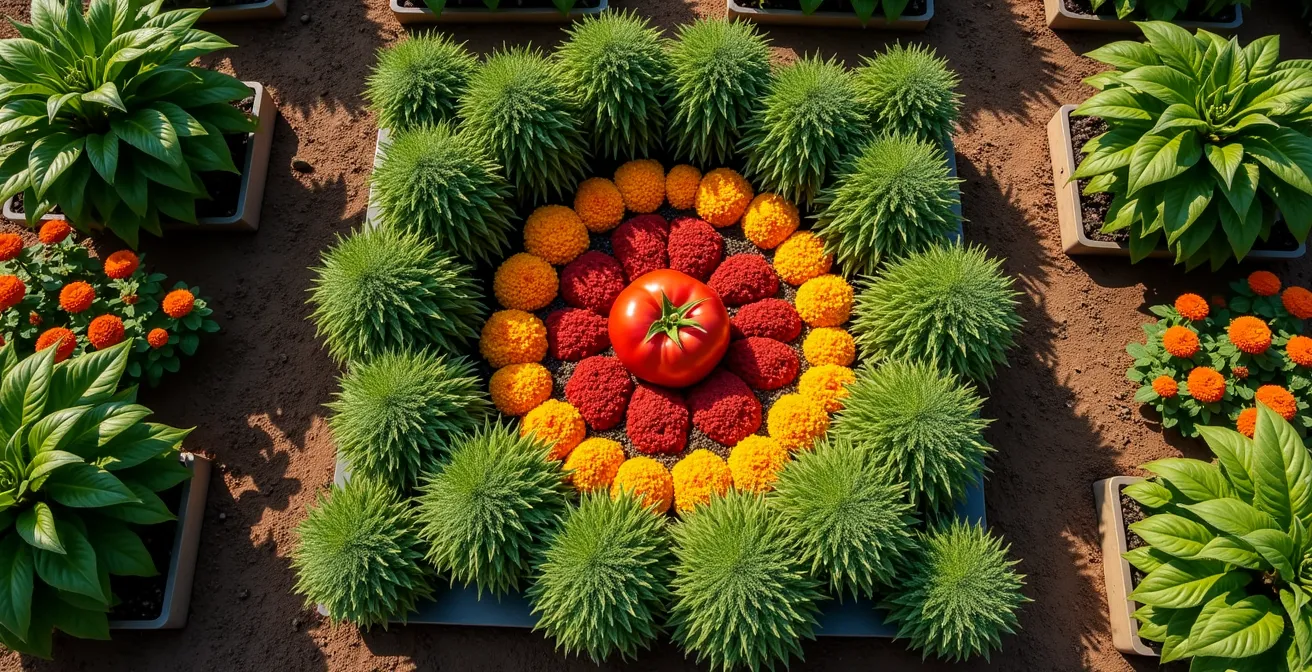
This isn’t folklore; it’s ecological strategy. You are creating a push-pull system: the scent of marigolds and onions “pushes” pests away, while the flowers “pull” predators in. Gardenary’s field trials of this “three-ring system”—with chives as the inner ring, nasturtiums as the middle (trap crop) ring, and marigolds as the outer border—showed an incredible 80% reduction in aphid populations. It transforms a simple garden bed into a sophisticated, layered defense zone where multiple protective mechanisms are working in concert.
By orchestrating this ecosystem of plants, you’re not just growing tomatoes; you’re designing a fortress that actively defends itself.
Why Tilling Your Soil Kills the Micro-Organisms That Feed Your Plants?
The long-standing tradition of tilling or turning over garden soil each spring is one of the most destructive practices for soil health and, by extension, your pest defense system. While it may feel productive, tilling is a catastrophic event for the soil ecosystem. It pulverizes soil structure, kills earthworms, and, most critically, shatters the delicate underground networks of mycorrhizal fungi. It also destroys the habitat for crucial ground-dwelling aphid predators like ground beetles and spiders.
An undisturbed, no-till soil develops a complex, stable structure full of air pockets and channels created by roots and soil life. This is the ideal environment for the beneficial microorganisms that feed your plants and for the predators that protect them. Research from Utah State University Extension shows that undisturbed soil maintains three times higher populations of ground-dwelling aphid predators. When you till, you obliterate this habitat, leaving your plants without their microscopic allies and their macroscopic guardians. You are essentially demolishing your own defensive infrastructure.
Transitioning to a no-till or minimal-tillage system is a powerful step towards building systemic resilience. The approach is simple: instead of digging amendments in, you layer them on top. Add compost and mulch to the soil surface and let earthworms and microorganisms do the work of incorporating them. This mimics the natural process of decomposition in a forest, building rich, healthy topsoil over time. This method not only preserves your soil’s living ecosystem but also dramatically reduces your workload.
Your Action Plan: Transitioning to a No-Till Garden
- Week 1: Stop all tilling immediately. Assess your soil’s current compaction by pushing a screwdriver into the ground; resistance indicates compaction.
- Week 2: Apply a 2-3 inch layer of high-quality compost directly on the soil surface. Do not mix it in.
- Week 3: Add a 4-6 inch layer of mulch (like straw, shredded leaves, or wood chips) on top of the compost to retain moisture and create a habitat for predators.
- Week 4: Only if compaction is severe, use a broadfork to gently lift and aerate the soil without turning it over.
- Ongoing: Keep the soil covered at all times, either with mulch or by planting cover crops like clover in any bare spots to keep living roots in the soil.
By protecting your soil structure, you are cultivating the very foundation of a pest-resistant garden.
Key Takeaways
- Systemic Resilience, Not Chemical Warfare: The most effective aphid control strategy is to build a garden ecosystem that defends itself through healthy soil, predator insects, and smart planting.
- Soil is Your First Line of Defense: Lifeless, tilled, and depleted soil grows weak plants that attract pests. Healthy, no-till soil full of microbial life grows strong plants that repel them.
- You Are What You Eat: High-nitrogen synthetic fertilizers create a feast for aphids by promoting weak, sappy growth. Slow-release organic compost builds strong, pest-resistant plants.
Compost Tea: When Should You Brew It for Maximum Effect?
After you’ve established a foundation of healthy, no-till soil and cultivated a population of beneficial insects, the final layer of an advanced IPM strategy is proactive biological support. This is where compost tea comes in. It’s not a fertilizer in the traditional sense, but rather a liquid inoculation of beneficial microorganisms. When brewed correctly, compost tea is a concentrated dose of the bacteria and fungi that protect plants, outcompete pathogens, and improve nutrient uptake.
The tactical advantage of compost tea is its dual-application method. Applied as a soil drench, it floods the root zone with beneficial life, boosting the soil food web. Applied as a foliar spray, it coats the leaves with a biofilm of “good” microbes. This microbial shield makes it physically difficult for pests like aphids to feed and creates an environment where pathogenic fungi cannot take hold. A 2023 field study showed that tea applied within 24 hours of brewing could increase beneficial microbe colonization on leaves by 400%.
However, timing and type are everything. The “recipe” for your tea should change based on your tomato plant’s growth stage. Early on, plants need a fungal-dominant tea to establish strong root systems. During vegetative growth and fruiting, they benefit more from a bacterial-dominant tea. Furthermore, the tea is a living product; its effectiveness plummets after 24 hours. It must be brewed and applied quickly, during the cool hours of the morning or evening, to ensure the microbes survive and establish themselves on the plant. A tea that smells sour or unpleasant has gone anaerobic and should be discarded, as it can harm your plants. When brewed and applied with precision, it’s the ultimate proactive tool for enhancing the systemic resilience you’ve worked to build.
By moving your focus from killing pests to cultivating a complex, thriving garden ecosystem, you solve the aphid problem before it even begins. Your goal as a scout is not a sterile, pest-free garden, but a balanced, resilient one where nature’s own defenses do the heavy lifting.